

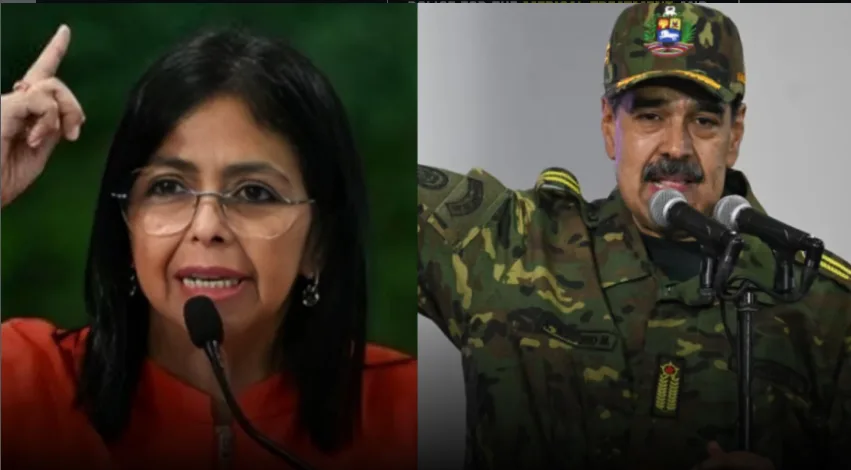
Venezuela’s Supreme Court has appointed Vice-President Delcy Rodríguez as interim president following the reported arrest of President Nicolás Maduro by United States authorities.
In a ruling issued on Monday, the court said Rodríguez would “assume and exercise, in an acting capacity, all the attributes, duties and powers inherent to the office of President” in order to guarantee administrative continuity and the defence of the nation. The justices added that she would oversee the continuity of the state, the running of government, and the protection of Venezuela’s sovereignty during what they described as the president’s “forced absence.”
The court further disclosed that it would deliberate on the legal framework required to manage the country during the period, as uncertainty surrounds the length and implications of Maduro’s absence.
Reacting to the development, U.S. President Donald Trump confirmed that Maduro had been taken into U.S. custody and announced that Washington would temporarily oversee Venezuela pending a leadership transition. Speaking at his Mar-a-Lago estate, Trump said the United States would “run the country until such time as we can do a safe, proper and judicious transition,” though he did not provide details on how the plan would be implemented amid opposition from Venezuela’s vice-president, legislature, and military leadership.
Trump added that the interim plan would include deploying major U.S. oil companies to help repair Venezuela’s severely damaged energy infrastructure, while maintaining the existing U.S. embargo on Venezuelan oil exports. He also said U.S. forces would remain on alert, with a team of senior officials tasked with restoring oil production and ensuring the welfare of the Venezuelan population.
According to a source familiar with the matter, a plane carrying Maduro landed at Stewart International Airport in New York shortly before 5pm local time and was expected to transport him onward to New York City.
The developments have sparked intense debate both within Venezuela and internationally, as questions mount over sovereignty, legality, and the future direction of the South American nation.