

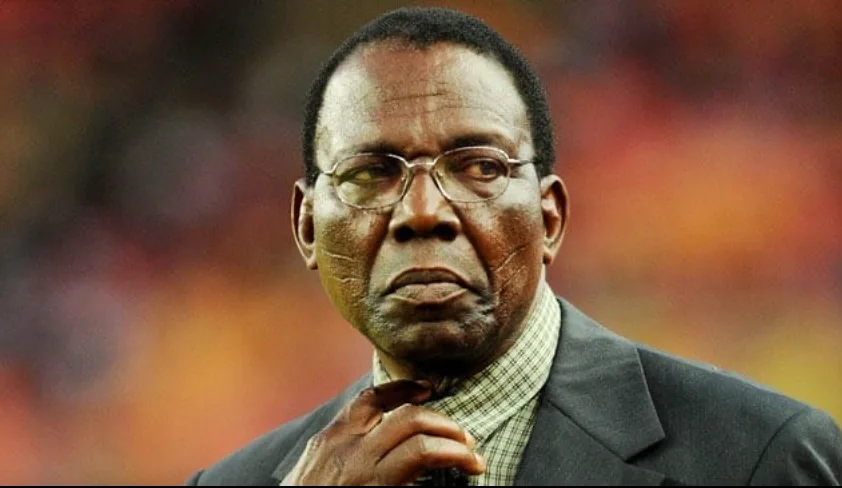
Nigeria’s football community and the nation at large are in mourning following the passing of one of the country’s most respected football figures, Chief Festus Adegboye Onigbinde, who died at the age of 88.
The sad news was confirmed by his family in an official statement signed by Mrs. Bolade Adesuyi, who announced that the revered coach, Modakeke High Chief, father, husband, grandfather, and trailblazing sports administrator breathed his last a few minutes ago.
“With great gratitude to God for a life well spent, we announce the passing of this great man: a Modakeke High Chief, the 1st indigenous Nigerian Super Eagles football coach, father, husband, grandfather, great-grandfather, brother, and friend – High Chief Festus Adegboye Onigbinde,” the family statement read.
“We thank God for the fulfilled life and your contributions to the Nigeria nation and the world as an unequalled football coach,” it continued. “We pray that your soul will rest perfectly in the bosom of your & our Lord Jesus Christ. Good night till we meet to part no more.”
Widely celebrated as Nigeria’s first indigenous coach to lead the national team, Onigbinde took charge of the Green Eagles (as the Super Eagles were then known) from 1983 to 1984. During that tenure, he guided the team to a historic silver medal finish at the 1984 Africa Cup of Nations in Côte d’Ivoire — Nigeria’s best performance at the tournament up to that point — narrowly losing the final to Cameroon.
Decades later, Onigbinde returned to national duty and achieved one of the biggest milestones in Nigerian football history: qualifying and leading the Super Eagles to the 2002 FIFA World Cup co-hosted by South Korea and Japan. That appearance marked Nigeria’s third consecutive World Cup participation and cemented Onigbinde’s legacy as a pioneer who bridged generations in Nigerian football.
Beyond the touchline, Chief Onigbinde was a respected community leader in Modakeke, a High Chief, and a father figure whose influence extended far beyond sports into education, mentorship, and national pride.
Tributes have already begun pouring in from former players, coaches, football administrators, and fans across Nigeria and the diaspora, with many describing him as a “father of Nigerian football” whose discipline, tactical brilliance, and unwavering patriotism inspired countless generations.
As Nigeria bids farewell to this icon, his contributions — from AFCON silver to World Cup qualification — will forever remain etched in the annals of Nigerian sports history.
Rest in perfect peace, High Chief Festus Adegboye Onigbinde. Your legacy lives on.