


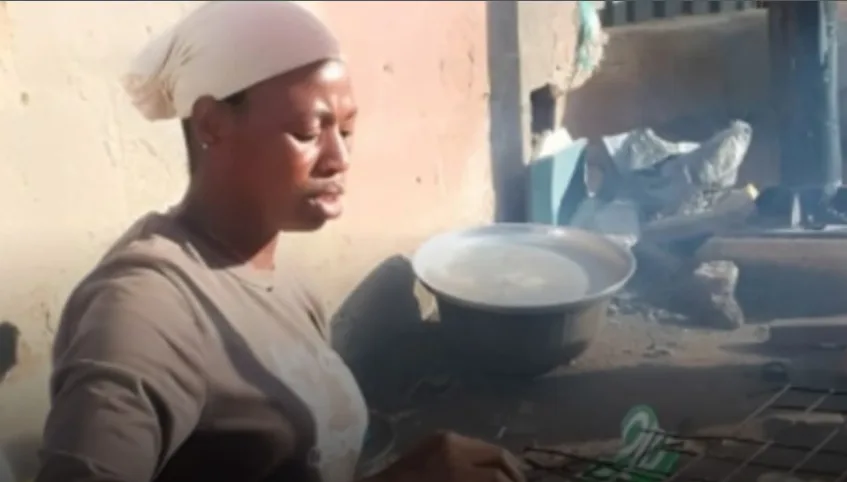
In the bustling streets of Ibadan, Mrs. Lateef Rukayat has turned a simple roadside roasted corn business into a remarkable success story that defies economic hardships. The determined mother of six abandoned her long-cherished hairdressing profession in January 2021 to venture into selling roasted corn, a move driven by the need to adequately support her family’s growing expenses. Today, her enterprise generates an impressive ₦750,000 monthly, enabling her to keep two of her children in higher institutions while ensuring the others receive quality education.
Rukayat’s journey highlights the resilience required for small-scale businesses in Nigeria’s challenging economy. She started with a loan obtained through a local lending scheme called “Network,” which carried interest but provided the crucial capital to purchase her first bag of corn. While the cost of a bag of corn has dropped from between ₦30,000 and ₦35,000 to around ₦15,000, she notes that soaring expenses on transportation, charcoal, and packaging materials have made the business far from the low-capital venture many assume it to be. Despite these pressures, her daily operations often see her turning ₦20,000 investments into ₦25,000 to ₦27,000 in earnings, which she diligently channels into family needs and school contributions.
The Ibadan businesswoman emphasized the perishable nature of her product, explaining that roasted corn must be sold fresh as leftovers quickly lose appeal and become difficult to offload the following day. She recalled a tough period when she raised prices from ₦200 to ₦400 per serving amid rising costs, only to watch customers stay away, resulting in zero profit. Her story underscores the delicate balance small traders must maintain between covering expenses and remaining accessible to everyday buyers in a high-inflation environment.
Reflecting on her roots, Rukayat described hairdressing as her “hard-earned” dream profession, which she completed through apprenticeship. However, when that venture slowed, she pivoted without hesitation to ensure her children’s future remained bright. Her success comes without any government grants or interventions, a reality she hopes will change as she appeals for reduced prices of essential goods and targeted financial support for small-scale entrepreneurs like herself.
Rukayat’s determination serves as an inspiring example for many struggling traders across Oyo State and beyond. In a time when economic survival often feels insurmountable, her ability to sustain a family, educate her children through university, and build a viable business from the streets of Ibadan proves that with grit and adaptability, even humble trades can yield transformative results. Her experiences also spotlight the urgent need for policies that genuinely uplift grassroots businesses powering local economies.