

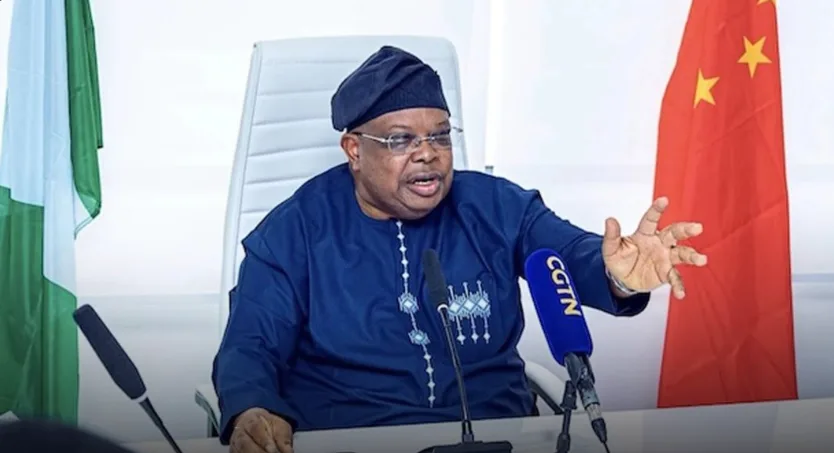
The Federal Government has announced plans to invest $2 billion in an East-West Super Grid project designed to strengthen Nigeria’s electricity transmission network and increase its capacity to at least 19,000 megawatts.
The Minister of Power, Joseph Tegbe, disclosed this during an interview on TVC Breakfast, explaining that the proposed project would complement the existing national grid and improve the stability of electricity supply across the country.
According to the minister, procurement has commenced, and the project is expected to be completed within two years.
“The East-West Grid is going to cost about $2 billion. But again, it will have capacity for us to effectively have at least 19,000 megawatts capacity,” Tegbe said.
He explained that the project would connect major electricity transmission corridors across Nigeria, addressing critical weaknesses in the existing network. Some transmission lines and related facilities, he noted, are more than 50 years old and increasingly vulnerable to breakdowns.
The government is also conducting a technical audit to identify ageing infrastructure that requires urgent repairs, upgrades or replacement.
Beyond transmission, Tegbe said Nigeria was targeting 20,000 megawatts of electricity generation, with industrialist Aliko Dangote reportedly expressing interest in supporting the expansion plans.
He also identified the Mambilla Hydroelectric Power Project, which has a potential generation capacity of 3,000 megawatts, as a major component of the country’s long-term electricity expansion strategy.
Additionally, the government has identified 21 dams along the Sokoto-Badagry Express Road corridor for possible development into small hydropower facilities. Discussions are reportedly ongoing with investors to explore their development.
The minister stressed that increased private-sector participation in electricity transmission and distribution would be necessary to improve power supply.
If successfully implemented, the proposed super grid could represent a major investment in Nigeria’s electricity infrastructure. However, Nigerians will be watching to see whether the project translates into more reliable electricity for homes, businesses and industries.
Do you think a $2 billion investment in transmission infrastructure can finally address Nigeria’s persistent electricity challenges, or should the government give equal attention to generation and distribution?