


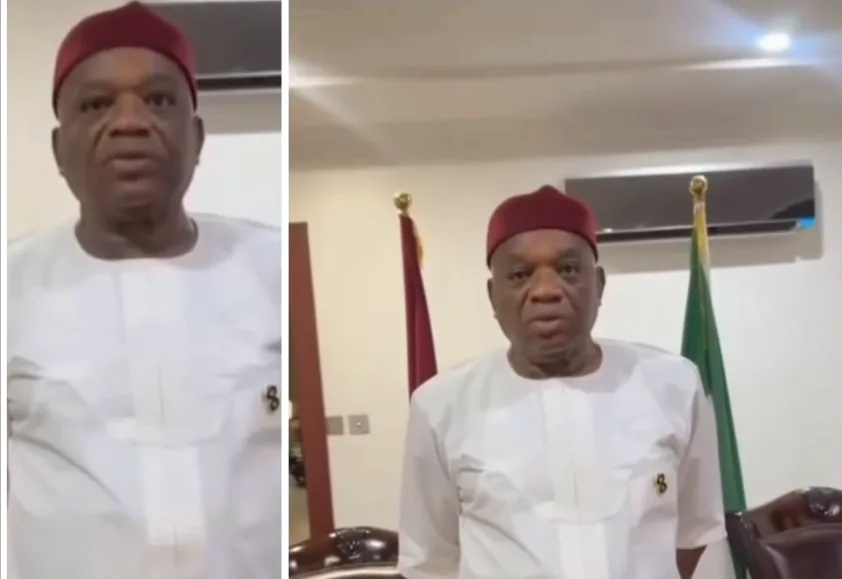
Former Abia State Governor and Senator representing Abia North, Orji Uzor Kalu, has said that although Nigeria is currently facing significant economic and social challenges, President Bola Ahmed Tinubu should not be held solely responsible for the country’s difficulties.
Kalu made the remarks while reacting to recent comments by the Catholic Bishops’ Conference of Nigeria, acknowledging the important role of the bishops in speaking on national issues while defending the Tinubu administration.
“The Catholic Bishops are the conscience of the country. There’s difficulty in Nigeria, but it’s not the fault of President Tinubu,” the senator said.
Watch video below:
According to Kalu, many of Nigeria’s current economic and structural problems predate the present administration and have accumulated over several years. He argued that addressing the nation’s challenges requires time, patience, and sustained policy implementation rather than placing blame on one government alone.
The senator maintained that while citizens are experiencing hardship, the administration should be given the opportunity to implement reforms aimed at stabilising the economy and improving living conditions.
His comments come amid continued public debate over the state of the economy, inflation, rising cost of living, and other challenges affecting millions of Nigerians.
The Catholic Bishops’ Conference of Nigeria has repeatedly called on political leaders to address issues such as insecurity, economic hardship, unemployment, and governance, urging authorities to adopt policies that improve the welfare of citizens.
Kalu’s remarks have generated mixed reactions, with supporters agreeing that many of Nigeria’s problems are longstanding and cannot be attributed solely to the current administration. Others, however, argue that every government must accept responsibility for the outcomes of its policies while in office and remain accountable to the people.
The exchange reflects the ongoing national conversation about governance, economic reforms, and the best path toward addressing Nigeria’s pressing challenges.