

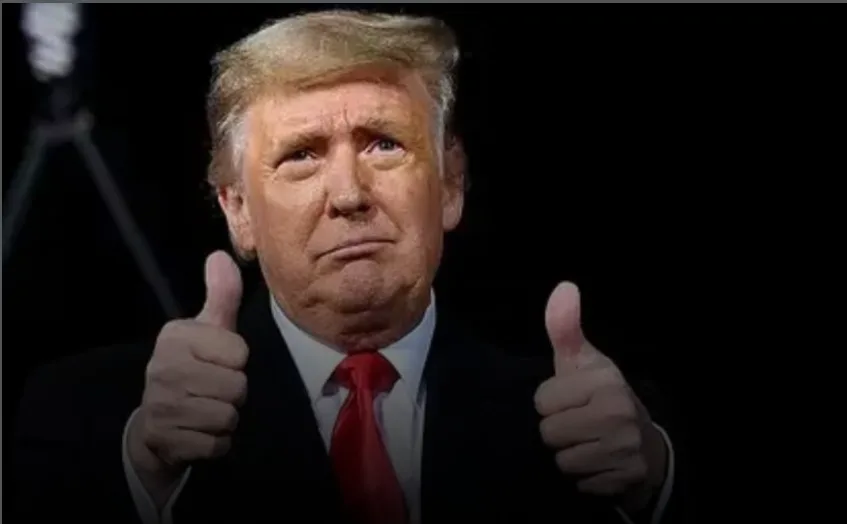
In a fiery address in Washington on Friday, U.S. President Donald Trump declared victory in one of the most contentious counterterrorism campaigns of his administration, asserting that American military operations in Nigeria have dramatically curtailed the targeted violence against the country’s Christian population.
“As you know, we recently struck Nigeria and largely ended the slaughter of great Christian populations,” Trump stated, painting a vivid picture of the horrors that preceded the intervention.
According to the President, Nigerian Christians — part of one of Africa’s largest Christian communities — faced systematic butchering by terrorist groups. He described scenes of women, children, and the elderly being killed in large numbers before U.S. action turned the tide.
Trump credited precision strikes with decapitating terrorist leadership, saying U.S. forces eliminated the group’s top leader, second-in-command, and third-in-command. This, he argued, sent a powerful deterrent message: further attacks would invite an even stronger response.
Background on the U.S. Intervention
The claims build on earlier operations, including high-profile strikes in late 2025 targeting ISIS affiliates in northwest Nigeria, particularly in areas like Sokoto State. These actions were conducted in coordination with Nigerian authorities and focused on militants accused of primarily attacking Christian villages and worshippers.
Trump has long framed the violence in Nigeria as an “existential threat” to Christianity, designating the country a Country of Particular Concern for religious freedom violations. His administration’s approach combines military pressure with diplomatic efforts, emphasizing protection of religious minorities amid ongoing insurgency challenges from groups like Boko Haram and ISWAP.
A Turning Point for Religious Freedom?
This latest assertion comes as part of Trump’s broader pledge to defend Christians worldwide “100%.” Supporters view the operations as a decisive stand against religious persecution, potentially saving thousands of lives in a region long plagued by farmer-herder clashes, banditry, and jihadist extremism that have disproportionately affected Christian communities in the Middle Belt and North.
Critics and analysts, however, note that Nigeria’s security issues are complex, involving multiple actors and not solely religious in nature. While the strikes may have disrupted specific terrorist networks, the full impact on ground-level violence remains under scrutiny.
Trump warned that any resurgence in attacks would be met with overwhelming force, signaling that U.S. commitment to this issue is far from over.
For Nigeria, a nation with deep religious diversity and strategic importance in West Africa, the developments highlight both the potential for international partnership in counterterrorism and the sensitivities around sovereignty and foreign intervention.